1. Creativity is messy
You never know when you are at the very beginning of something great. Often you don’t know it’s going to be great even by the half-way point.
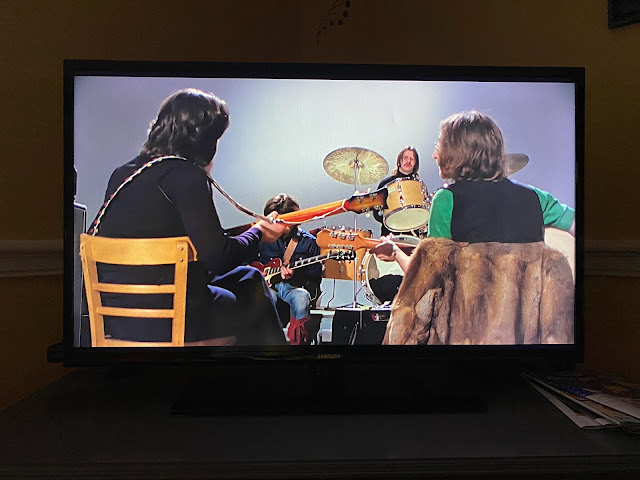
The famous minute-long video of Paul strumming and humming could have gone any of a million ways. Or it could have died in the next minute. Once we recognize a few notes of what would become the song “Get Back” we feel the thrill of being there for the birth of a classic. Ringo stares into space and George yawns. The start is just that. The real work comes in figuring out where to take it once you start moving. “Get Back” was a protest song: a rebuttal to the white supremacists marching the streets of London...until it wasn’t. It became a song about people with a lot of names from a lot of places until it became a song about Jojo, the man from Tucson, Arizona.
As Scott Adams explained, “Creativity is allowing yourself to make mistakes. Art is knowing which ones to keep.” You try things out, and see what works but generally you’ve got to wade through a lot of mediocre ideas before finding a great one. In order to be creative, you don’t only have to be willing to make “mistakes,” you actually have to make them. Paul Simon talked, in an interview with Dick Cavett, about feeling stuck with Bridge Over Troubled Water when every direction he started going, took him to someplace he didn’t want to be. You’ve got to keep pushing through.
2. Creativity takes time.
One of the only complaints I’ve read, in the dozens of reviews about the "Get Back" documentary, is that it is too long, but following a band from brainstorming songs to the final performance in the span of one hour doesn’t teach us anything about the real process. Having the privilege of being in the room with the Beatles and seeing a song evolve over days and weeks mixed in with a bunch of other songs, helps us understand the truth about how these things are made. There is no button songwriters push for a finished product, they need to put in the work over a period of time to bring a song to life. It is a courtship and eventual marriage of craft and inspiration.
One of my artist friends told me that she is just standing around in all of the photographs of her working on projects. One might think that she doesn’t do much, except that there are many large sculptures to prove otherwise. She works with brick, which is physically intense and requires lots of pauses. And then there are inevitable setbacks, which will require more time than expected. Even when work is constant, progress generally comes in spurts.
3. Creativity thrives on collaboration
While solitude definitely has its place in the creative process, one person with one idea bouncing around isn’t usually as interesting as a few people with several ideas bouncing off of each other. Others can serve as sounding boards. They may give a suggestion that leads to something that works. They may turn or nod their head when you’ve found the right word. Having another set of ears and eyes is extremely helpful, especially when the other person, or people you are working with are geniuses. The documentary shows Ringo coming into the studio with the start of "Octopuses Garden" but unsure of what to do with it. George gives an encouraging smile and starts plinking away to give a little momentum to moving the song along. He got by with a little help from his friend.
4. The Creative process requires play
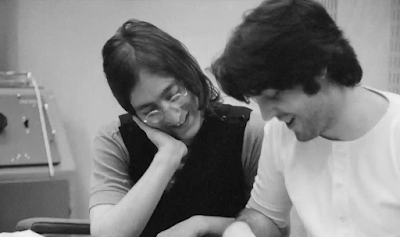
I was starting to feel a little anxious watching the part of the documentary that showed the days leading up to the Beatles’ rooftop performance; and that’s with me knowing that it would work out. (The Get Back footage is 50 years old after all.) I was a little frustrated with Linda bringing her daughter into the studio, even though The Beatles' adorable interactions with her were fun to watch. I was a little annoyed when Paul and John were dancing around and singing old songs they wrote as teenagers, because they were down to the wire and needed to get serious about finishing writing the actual songs they would perform. But even during those “goofing-off times” they were tapping into their creative and musical minds. They were in a mode where they were working together. The silly voices, silly facial expressions, trying out different tempos, chiming in on rest notes was all part of the process. Silliness keeps ego at bay, promotes camaraderie, and risk-taking. Artists aren’t robots. The best ideas don’t always follow deadlines. All the little ditties that didn’t amount to a song in time to make the Let It Be album, were seeds that blossomed into the album that became Abbey Road. And the audience is more likely to enjoy the product when the artists enjoy the process.
5. Creativity requires faith:
Understanding that obstacles are part of the creative process means it takes faith to even get started. Creativity means working until the solution presents itself, and recognizing it when it comes. The problem that came with making a live performance recording was that the Beatles couldn’t layer lots of instruments. They’d each be playing one in the performance and the recording would come from that. What about keyboard? With four men on two guitars, drums, and a bass, they’d need another person. George mentions an amazingly talented person named Billy Preston. A week or so later, Billy happens to be in London and stops by to say “hi.” They invite him to jam, and after one song, John says, “You’re in the band.” They recognized Billy as the solution to their problem. On Billy’s end, he’d spent a lifetime gaining the skills that would open doors like that. He had the faith of a musician and put in the work. Many years later George Harrison died of cancer, and Billy played keyboards and sang at the Concert for George.
6. Creativity can be learned:
You may have felt the frustration that comes from working on school projects, in work committees or community teams with people who are painfully uninspired. They may show up but they never contribute, innovate, or solve anything. They may respond and critique with an “I agree” or “that won’t work,” but that’s not the same as having an original idea to offer. It is so important for children to be exposed to the Arts so that they can learn how to take initiative and offer a little vision. We need more creative solvers.
Creative geniuses have learned how the creative process works for them. When they were making that
painting or writing that poem, they weren’t just working through one piece, they were honing their skills
on how to create things in the future. It’s called meta-learning. The Beatles learned early in their career
in Hamburg how to fill eight hours of play time with mostly other people’s songs. The more they wrote,
the better they got. They really learned to listen while making the Rubber Soul album, and by Srgt.
Pepper’s they were experimenting with orchestral instruments and layers of complexity. Some musicians
start with the lyrics, others the music. There’s no set formula for creativity, each artist must find their own
way and they do it through many hours and years of practice.
Take the time to be silly and serious in exploring ideas. Get involved in the Arts.
Work with others and spend time alone. Try things that make you uncomfortable but will help you grow.
Learning to be more creative will come in handy every day in unexpected ways.